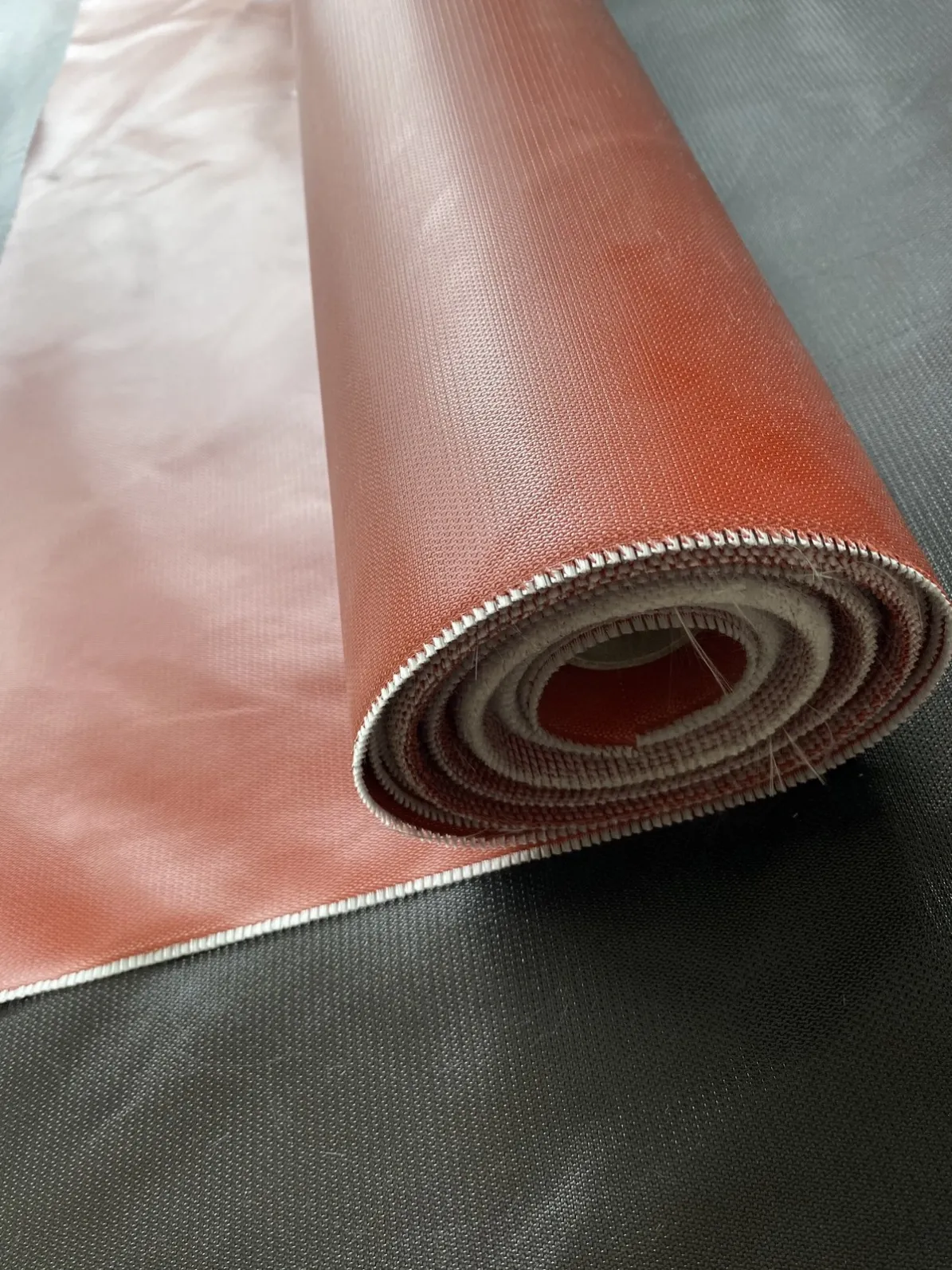
Silicone Coated Fiberglass Fabric
Silicone Coated Fiberglass Fabric
Single or double side. One approved construction.
Specifications
- Coating
- Silicone rubber, single or double side
- Base fabric
- High-temperature fiberglass fabric
- Thickness
- 0.2–2.0 mm
- Finished weight
- 200–3000 g/m²
- Width
- 1000 / 1200 / 1500 / 1800 / 2000 mm or custom
- Color
- White, black, red, orange, salmon, custom
- Process
- Calendered or dip-coated, heat vulcanized
Silicone Coated Fiberglass Fabric — Built Around Your Application
VETEX silicone coated fiberglass fabric is calendered or dip-coated with branded silicone rubber on a high-temperature, high-strength fiberglass base fabric, then heat-vulcanized. It is available single-sided or double-sided, 0.2–2.0 mm thick and 200–3000 g/m² finished weight, in white, black, red, orange, salmon or custom colors, at widths of 1 / 1.2 / 1.5 / 1.8 / 2 m.
Choose by Application
Welding Blanket
Recommended base fabric: 430 / 660 / 840 g/m² fiberglass. Choose single-side coating for spark and light-splash protection, double-side for heavier slag and repeated use. We recommend the coating weight together with you according to spark intensity and working temperature.
Expansion Joint / Compensator
Recommended base fabric: 660 / 840 / 1000 g/m² with double-side silicone coating for air-tightness. Note: silicone rubber must not be used for compensators carrying flue gas or steam containing SO₂ — tell us your media and we will propose an alternative coating.
Removable Insulation Jacket
Silicone coated fiberglass is our standard recommendation for removable pipe and equipment insulation jackets: soft finish for wrapping, weather-resistant surface, custom color available.
Smoke Curtain / Fire Curtain
For smoke barriers and fire curtains, PU, acrylic or silicone coated fabric are all candidate constructions — the choice follows your test standard. Send us the standard and we propose the coating.
How to Judge Silicone Coated Fabric Quality
Coating content and surface: a flat surface without porosity, meeting the specified weight — insufficient coating or heavy porosity cuts insulation performance and service life.
Softness: fabric that feels stiff may contain filler in the silicone; it can crack at temperature and lose vibration resistance.
Coating adhesion: good fabric keeps silicone and base cloth tightly bonded — no detachment, no coating drop after abrasion.
Cloth surface: no scratches, coating weight uniformity within 5%, no defects in the base fabric, no color difference.
Before Quotation, Please Confirm
Confirming these ten points with us speeds up an accurate quotation and avoids later specification disputes:
1. Application (where and how the fabric will be used)
2. Base fabric (e.g. E-glass style 3732 at 430 g/m², or style 3788 at 1650 g/m²)
3. Finished weight (g/m², coating included)
4. Thickness (mm)
5. Coating type (silicone / PU / acrylic / vermiculite)
6. Single-sided or double-sided coating
7. Width (1000 / 1200 / 1500 / 1800 / 2000 mm, or custom)
8. Roll length
9. Color
10. Required standard or test report (e.g. EN 1869, UL 94)
Packaging & Certification
Packing per customer requirement.
Certificates and test reports are arranged on request for each project.
Trial orders, custom specifications and mixed product orders are welcome. Send us your application and target specification, and the VETEX team will come back with a recommended construction within one working day.
Temperature — coating vs substrate
Silicone coating: continuous 250°C; short-term 280–300°C. E-glass substrate: continuous 550°C, transient 600°C. Substrate limits are not coated-product limits — confirm continuous temperature, peak exposure, duration, direct contact, mechanical load and atmosphere for the proposed construction before approval.