News & Insights
Single vs Double-Side Silicone Coated Fiberglass Fabric
Single vs Double-Side Silicone Coated Fiberglass Fabric
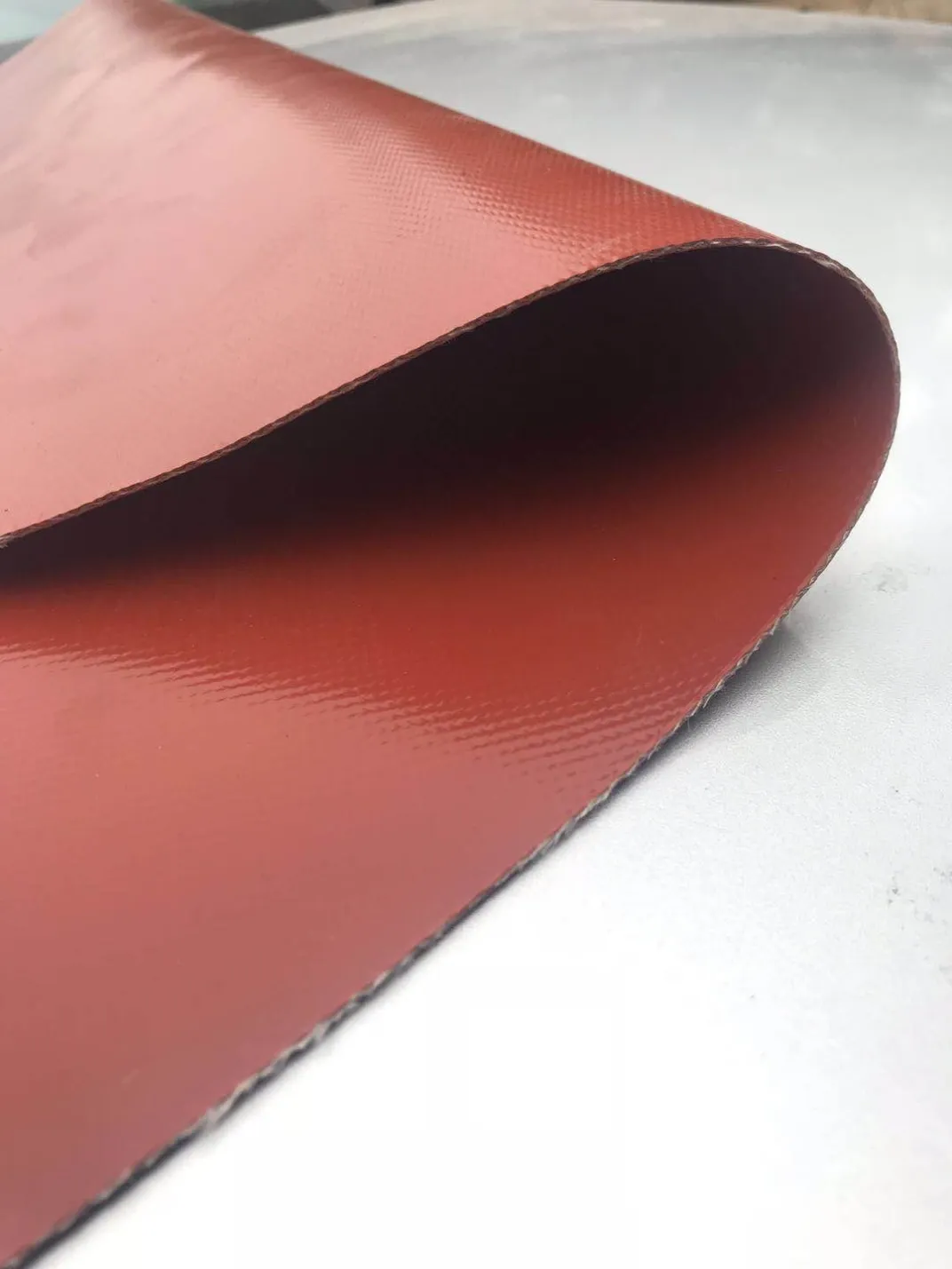
Silicone coated fiberglass fabric combines a woven fiberglass base cloth with a silicone coating applied to one or both surfaces. It is widely considered for industrial applications where buyers require a flexible coated fabric with a defined surface finish, practical handling characteristics and a fiberglass reinforcement structure.
One of the first decisions during sourcing is whether the fabric should be coated on one side or both sides.
The answer should not be based only on price.
The appropriate coating structure depends on how the material will be processed, which surfaces will be exposed and what the finished product needs to accomplish. Understanding these factors before requesting quotations can make specification comparison more accurate and reduce unnecessary sampling.
What Is Single-Side Silicone Coated Fiberglass Fabric?
Single-side silicone coated fiberglass fabric has silicone applied primarily to one surface of the fiberglass base cloth. The opposite surface retains more of the appearance and texture of the original woven fabric.
This construction may be considered when the application requires a coated working surface but does not require identical surface treatment on both sides.
For example, one side may face the working environment while the other side is protected, laminated, sewn into another structure or positioned against a separate insulation layer.
A single-side construction may also be selected when coating weight, flexibility, handling or project cost needs to be controlled. However, the suitability of the material still depends on the selected fiberglass base cloth, coating formulation, coating amount and finished-product design.
Buyers should not assume that every single-side coated fabric has the same surface quality or performance.
What Is Double-Side Silicone Coated Fiberglass Fabric?
Double-side silicone coated fiberglass fabric has silicone applied to both surfaces of the fiberglass base cloth.
This provides coated surfaces on both sides and may be preferred when either side can be exposed during fabrication, installation or use. It can also provide a more uniform appearance for products in which both surfaces remain visible.
A double-side construction is often considered for fabricated industrial products, removable covers, flexible connectors, curtains or blankets where both faces may come into contact with the surrounding environment.
The additional coating does not automatically make every double-side product the correct choice. It can affect total weight, thickness, flexibility and cost. These factors should be evaluated against the actual application rather than treated as a universal upgrade.
Key Differences for Industrial Buyers
1. Surface Exposure
The first question is whether one surface or both surfaces will be exposed during normal use.
If only one face requires a coated surface, a single-side construction may be sufficient. If both sides may be exposed, handled or inspected, double-side coating may provide a more consistent solution.
2. Fabrication Method
Cutting, sewing, folding and joining can influence the choice.
The buyer should explain whether the material will be converted into welding blankets, removable insulation covers, flexible connections, curtains or another fabricated product. Small differences in coating structure can affect how the fabric behaves during processing.
A material should therefore be evaluated not only as a roll but also as part of the intended finished product.
3. Weight and Thickness
VETEX can discuss silicone coated fiberglass fabrics across a broad specification range:
- Thickness: 0.2–2.0 mm
- Weight: 200–3,000 g/m²
- Standard widths: 1.0 m, 1.2 m, 1.5 m, 1.8 m and 2.0 m
- Other widths: Available according to project requirements
- Colors: White, black, red, orange, salmon and customized colors
- Coating structure: Single-side or double-side
The required total weight should not be selected independently from the base cloth and coating amount.
Two fabrics with the same nominal total weight may use different combinations of fiberglass base fabric and silicone coating. This can produce differences in surface appearance, flexibility and handling.
4. Surface Quality
Industrial buyers should inspect more than color.
Useful surface checks include:
- Overall coating consistency
- Flatness of the coated surface
- Visible pinholes or uncovered areas
- Edge condition
- Flexibility
- Whether the measured weight meets the agreed specification
- Consistency between the approved sample and production material
A very soft fabric is not automatically a higher-quality fabric. Formulation and filler selection can also influence softness, weight and surface behavior. Buyers should evaluate the complete construction rather than relying on touch alone.
5. Cost and Purchasing Efficiency
Single-side coating may use less coating material than a comparable double-side construction, but purchase decisions should not be made only on the initial unit price.
An unsuitable fabric can create additional costs during cutting, sewing, installation or replacement.
The more useful comparison is the total value of the material within the finished application:
- Does the surface structure match the environment?
- Can the fabric be processed efficiently?
- Is the weight practical for handling?
- Are both coated surfaces actually necessary?
- Does the approved sample represent the final requirement?
How to Specify Silicone Coated Fiberglass Fabric
A clear inquiry should include more than the product name.
Industrial buyers should provide:
- Intended application
- Required single-side or double-side coating
- Preferred fiberglass base cloth
- Total weight or coating-weight requirement
- Required thickness
- Width and roll length
- Color
- Expected fabrication method
- Required testing or documentation
- Estimated order quantity
If the exact construction is not yet known, the application should be described first. A supplier can then discuss possible specification directions without relying on an incomplete product code.
Which Coating Structure Should You Choose?
Consider single-side coating when:
- One coated working surface is sufficient
- The reverse side will not be exposed in normal use
- The fabric will be laminated or combined with another material
- Weight, flexibility or budget needs to be controlled
Consider double-side coating when:
- Both surfaces may be exposed
- A consistent finish is required on both sides
- The material will be folded, reversed or fabricated into a product with two visible faces
- The finished product requires coated handling surfaces on both sides
These are selection guidelines rather than universal performance claims. Final suitability should be confirmed using the actual specification, approved sample and any testing required for the intended market.
Work With VETEX on the Right Construction
At VETEX, we discuss the coating structure together with the fiberglass base cloth, total weight, thickness, width, color and finished application.
Instead of selecting a material only from a general name, buyers can provide their processing requirements and intended use. This helps both sides establish a clearer specification before production.
Send VETEX your required application, coating side, thickness, weight, width and color to discuss an appropriate silicone coated fiberglass fabric construction.
FAQ
Is double-side silicone coating always better?
No. It provides coated surfaces on both sides, but it can also change weight, thickness, flexibility and cost. The correct option depends on the application.
Can silicone coated fiberglass fabric be customized by color?
VETEX offers white, black, red, orange and salmon options, with other colors discussed according to project requirements.
What widths are available?
Common widths include 1.0 m, 1.2 m, 1.5 m, 1.8 m and 2.0 m. Customized widths can be discussed.
What information is required for a quotation?
Provide the application, coating side, total weight, thickness, width, roll length, color, quantity and any testing or documentation requirements.
Should buyers approve a sample before ordering?
For a specification-sensitive project, an approved sample can help confirm surface condition, flexibility, color and construction before production.