News & Insights
Silicone Fabric for Welding Blankets: How to Specify the Right Construction
Specifying silicone coated fiberglass fabric for welding blankets: base fabric weight, single vs double side coating, and how spark intensity should drive your specification.
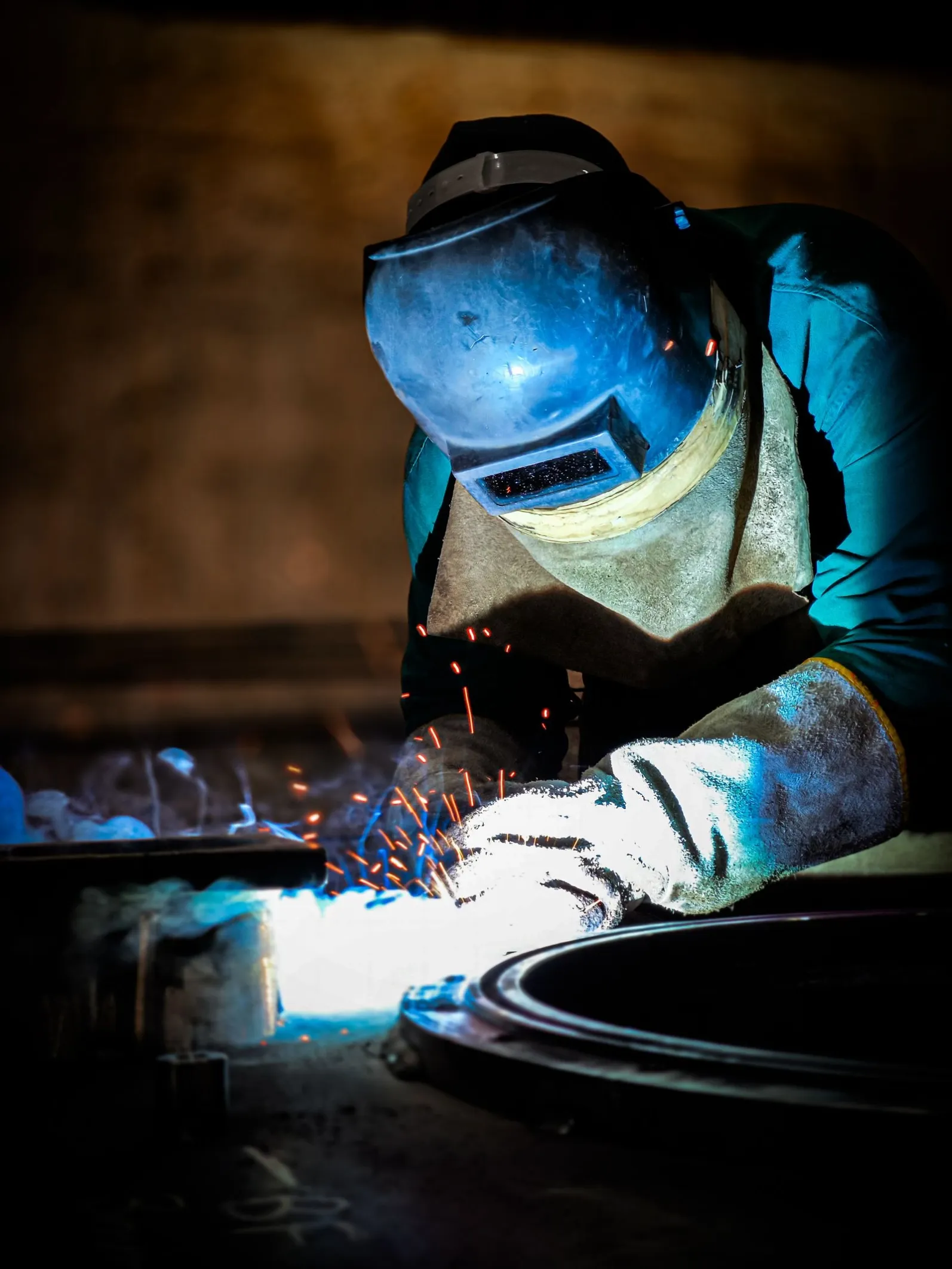
A welding blanket only performs as well as the fabric inside it. Buyers who specify "a welding blanket" without stating spark intensity, working temperature or reuse plans usually end up either overpaying for heavyweight construction or replacing cheap blankets every few weeks. This guide shows how VETEX specifies silicone coated fiberglass fabric for welding duty, step by step.
Quick Answer: The Three Decisions That Matter
First, base fabric weight: for general welding protection we recommend 430, 660 or 840 g/m² fiberglass base fabric. Second, coating side: single-side silicone coating suits spark and light-splash protection, double-side suits heavier slag and repeated use. Third, coating weight: we set it together with you according to spark intensity and working temperature.
Why Base Fabric Weight Comes First
The fiberglass base carries the mechanical load — tearing around grommets, dragging across steel, and repeated folding. Our welding-blanket fabric family spans 430–2000 g/m² with thicknesses from 0.4 to 2 mm, so the same coating system can be built on a light or heavy skeleton. A 430 g/m² base keeps the blanket light and economical; 660 and 840 g/m² bases buy durability for high-intensity work.
Single or Double Side: A Working Rule
Single-side silicone coating protects against sparks and light splash at lower cost. Double-side coating wraps the base fabric completely, which better resists heavier slag penetration and stands up to repeated use on both faces. If a blanket will be flipped and reused on both sides, specify double-side from the start.
What the Coating Actually Does
Silicone rubber is calendered or dip-coated onto the high-temperature fiberglass base and heat-vulcanized. The coating blocks splash penetration, adds abrasion resistance and flexibility, and keeps loose fibers contained. VETEX welding blankets of this family withstand working temperatures up to 1200°C depending on the material combination chosen.
A Specification Example You Can Copy
General workshop welding screen: 430 g/m² base, single-side silicone, standard width. Ship-repair and petrochemical structural welding: 660–840 g/m² base, double-side silicone, eyelets or pull-tabs as edge detail. Send us your spark intensity and environment, and we will return a recommended construction within one working day.
Next Step
Confirm three things before quoting: application, base fabric weight, and coating side. The VETEX team responds to specification questions within one working day and supports trial orders for first-market testing.